
Military Family Lifestyle Survey
Results
Home » Research » Military Family Lifestyle Survey Results

Quality of Life and the Future of Service:
Military Family Lifestyle Survey Findings
Since 2009, the Blue Star Families Military Family Lifestyle Survey (MFLS) has collected responses annually from military families addressing issues related to housing, financial security, employment, food insecurity, healthcare, childcare, and community belonging. The 2025 MFLS heard from more than 6,000 military-connected respondents, including 2,608 active-duty family respondents: 15% active-duty service members (n=401) and 85% spouses/domestic partners of active-duty service members (n=2,207).
Key Statistics
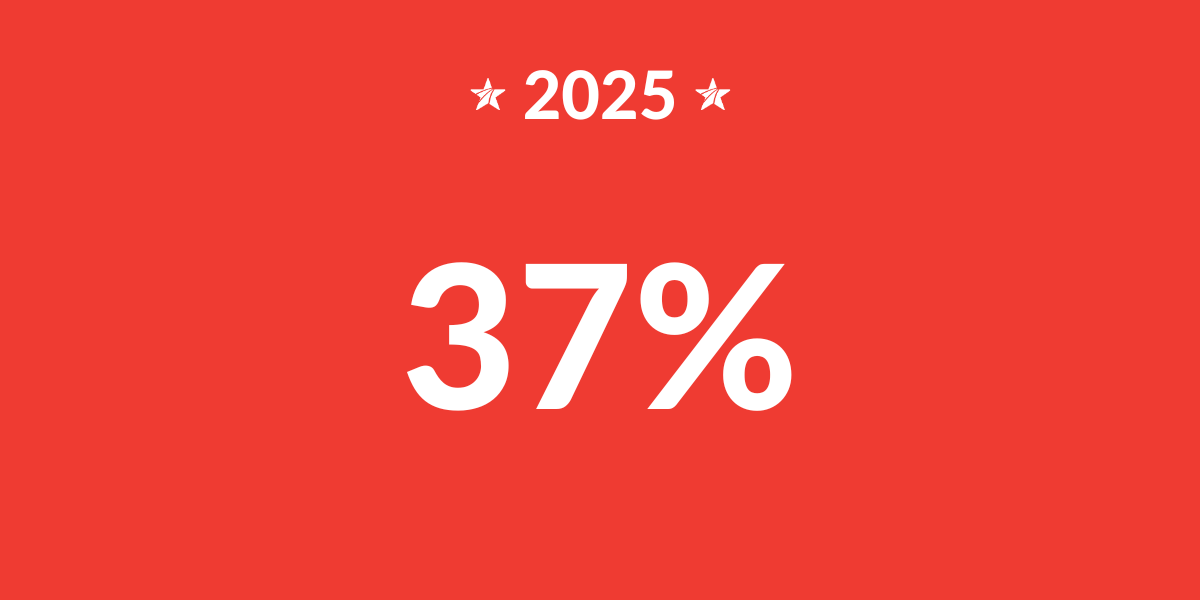
37% of active-duty family respondents would recommend a young family member join the military. (n=866)
30% of active-duty family respondents often or sometimes could not afford to eat balanced meals in the past year. (n=595)
23% of active-duty spouse respondents were unemployed. (Unemployment rate remained the same as 2024 MFLS) (n=241)
38% of active-duty family respondents are “just getting by” or “finding it difficult to get by.” (n=785)
Top Issues of Concern for 2025
Active-Duty Family Respondents (N=2,321):
- Military spouse employment (50%)
- Military pay (48%)
- Amount of time away from family as result of military service (39%)
- Childcare challenges (33%), BAH/off-base housing concerns (33%), and Dependent child education (33%) (three-way tie)
Veteran Family Respondents (N=2,475):
- Access to military/VA health care system(s) (54%)
- Understanding of military/veteran’s issues among non-military communities (40%)
- Military benefits (39%)
- Veteran employment (36%)
- Financial issues (26%)
National Guard Family Respondents (N=165):
- Military pay (46%)
- Amount of time away from family as result of military service (44%)
- Impact of deployment on family (43%)
- Military benefits (37%)
- Access to military/VA healthcare system(s) (33%)
Reserve Family Respondents (N=141):
- Amount of time away from family as result of military service (42%)
- Impact of deployment on family (37%)
- Access to military/VA healthcare system(s) (35%)
- Military benefits (32%)
- Childcare challenges (28%)
Survey Findings
Military Family Quality of Life: Annual Statistics
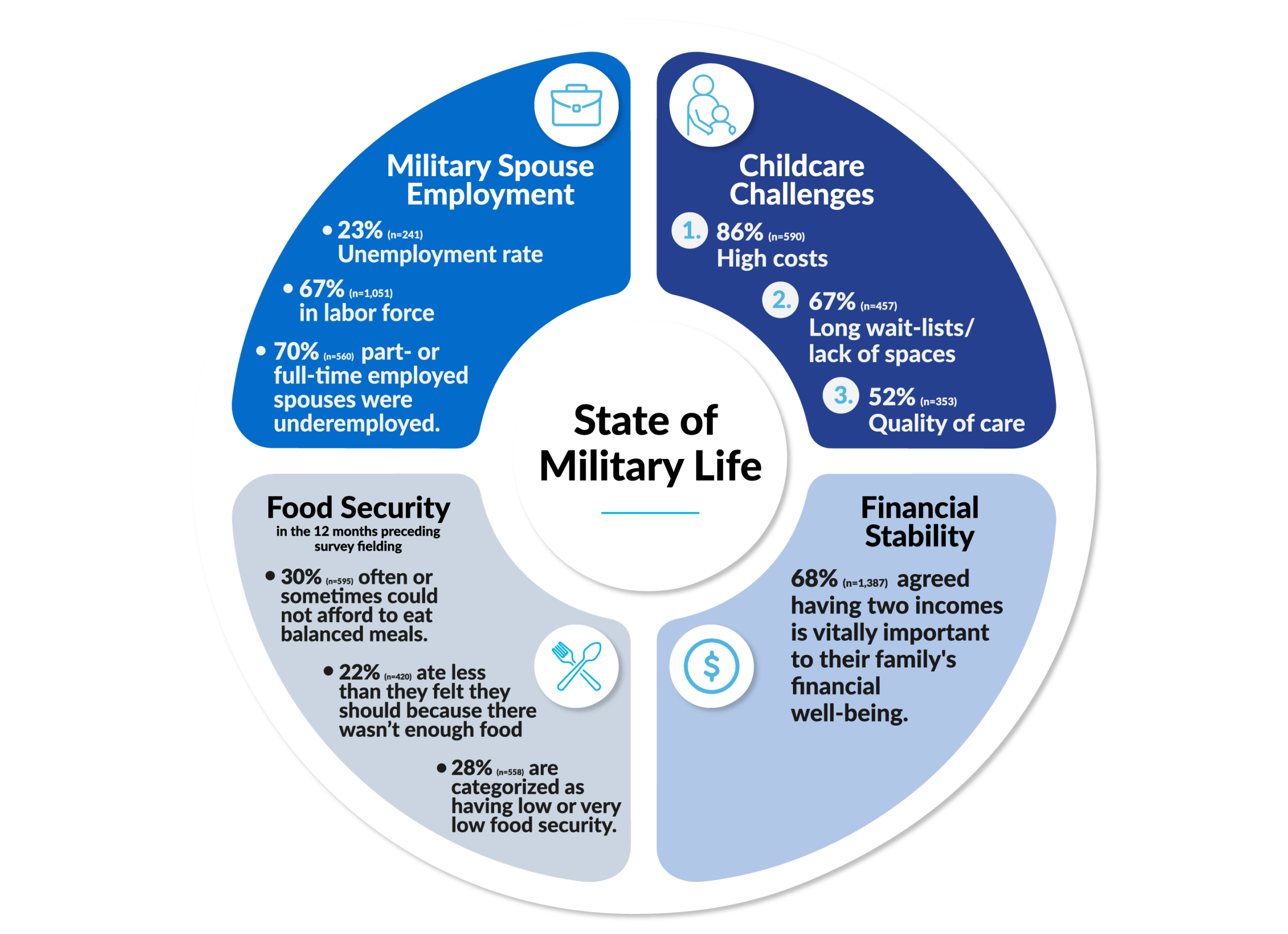
- 23% Unemployment rate (n=241)
- 67% in labor force (n=1,051)
- 70% part-time or full-time employed spouses were underemployed (n=560)
- 86% High costs (n=590)
- 67% Long wait-lists / lack of spaces (n=457)
- 52% Quality of care (n=353)
- 30% often or sometimes could not afford to eat balanced meals (n=595)
- 22% ate less than they felt they should because there wasn't enough food (n=420)
- 28% are categorized as having low or very low food security (n=558)
- 68% agreed having two incomes is vitally important to their family's financial well-being (n=1,387)
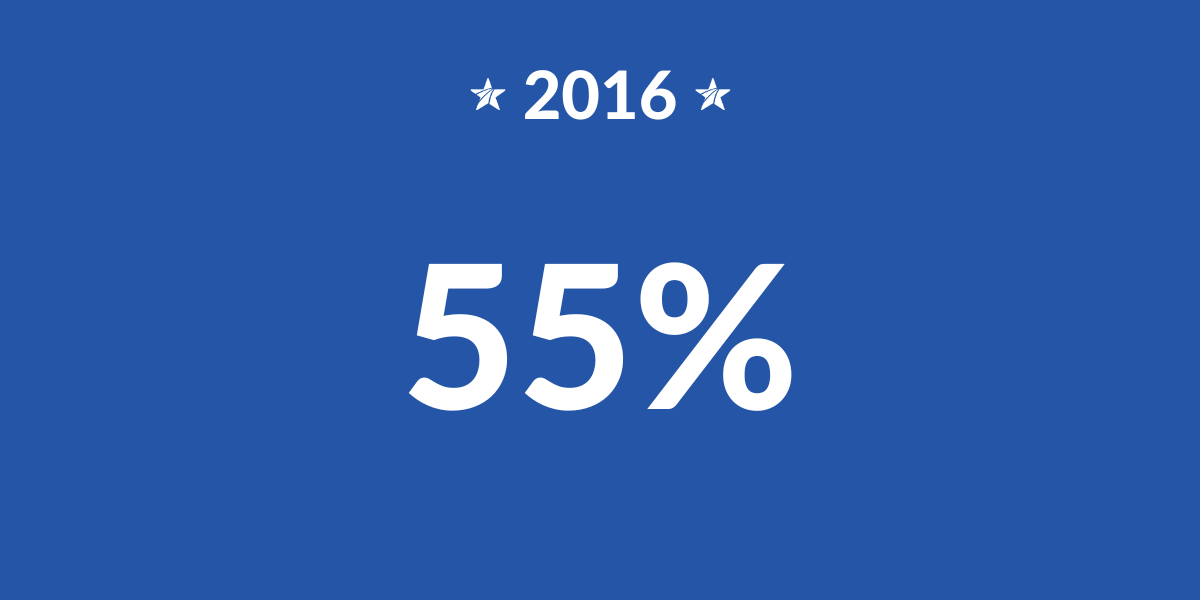
Proportion of Active-Duty Family Respondents Likely to Recommend Military Service
State of Military Life: A Closer Look

30% of active-duty family respondents often or sometimes could not afford to eat balanced meals (in the 12 months preceding survey fielding) (n=595)
21% of active-duty families experienced a disruption in medical or mental healthcare (since January 1, 2025) (n=412)
Enlisted and Officer Family Financial Situation and Food Security
Active-Duty Family Respondents
Enlisted
--------------------
51%
"Just getting by" or "finding it difficult" to get by financially (n=629)
Officer
--------------------
17%
"Just getting by" or "finding it difficult" to get by financially (n=128)
Enlisted -->
--------------------
51%
"Just getting by" or "finding it difficult" to get by financially (n=629)
<-- Officer
--------------------
17%
"Just getting by" or "finding it difficult" to get by financially (n=128)
Enlisted
--------------------
72%
Two incomes important to family's financial well-being (n=881)
Officer
--------------------
61%
Two incomes important to family's financial well-being (n=458)
Enlisted -->
--------------------
72%
Two incomes important to family's financial well-being (n=881)
<-- Officer
--------------------
61%
Two incomes important to family's financial well-being (n=458)
Enlisted
--------------------
40%
Were categorized has having low or very low food security (n=471)
Officer
--------------------
9%
Were categorized has having low or very low food security (n=63)
Enlisted -->
--------------------
40%
Were categorized has having low or very low food security (n=471)
<-- Officer
--------------------
9%
Were categorized has having low or very low food security (n=63)
Belonging and Perceptions of Community Support

Nearly three-quarters (73%) of active-duty family respondents trust their neighbors (n=1,546)
More than three-quarters (83%) feel safe where they live (n=1,743)
Of those who felt a sense of belonging to their local community:
--------------------
60%
Agreed they were likely to share their military experiences with a neighbor in their local community. (n=647)
Of those who did NOT feel a sense of belonging to their local community:
--------------------
42%
Agreed they were likely to share their military experiences with a neighbor in their local community. (n=289)
Of those who felt a sense of belonging to their local community:
-------------------- >>
60%
Agreed they were likely to share their military experiences with a neighbor in their local community. (n=647)
Of those who did NOT feel a sense of belonging to their local community:
<< --------------------
42%
Agreed they were likely to share their military experiences with a neighbor in their local community. (n=289)
Of those who felt a sense of belonging to their local community:
--------------------
71%
Agreed neighbors in local community truly appreciate sacrifices made by local military families. (n=769)
Of those who did NOT feel a sense of belonging to their local community:
--------------------
32%
Agreed neighbors in local community truly appreciate sacrifices made by local military families. (n=266)
Of those who felt a sense of belonging to their local community:
-------------------- >>
71%
Agreed neighbors in local community truly appreciate sacrifices made by local military families. (n=769)
Of those who did NOT feel a sense of belonging to their local community:
<< --------------------
32%
Agreed neighbors in local community truly appreciate sacrifices made by local military families. (n=266)
Of those who felt a sense of belonging to their local community:
--------------------
53%
Agreed neighbors in local community are prepared to support local military families if U.S. is in conflict. (n=576)
Of those who did NOT feel a sense of belonging to their local community:
--------------------
16%
Agreed neighbors in local community are prepared to support local military families if U.S. is in conflict. (n=113)
Of those who felt a sense of belonging to their local community:
-------------------- >>
53%
Agreed neighbors in local community are prepared to support local military families if U.S. is in conflict. (n=576)
Of those who did NOT feel a sense of belonging to their local community:
<< --------------------
16%
Agreed neighbors in local community are prepared to support local military families if U.S. is in conflict. (n=113)
Morale, Belonging, the Nation's Support, and the Future of Service
Most (77%) active-duty family respondents believe how service members and their families are supported during service strongly impacts future recruitment (n=1,742)
Looking ahead,
how confident are you
that service members and/or their families
will continue to receive the long-term support they need?
*Support will strengthen and adapt over time OR
Somewhat confident (support exists, but I worry about future commitment) (n=862)
*Support is already eroding or becoming fragmented) OR
Not at all confident (service members and their families will be increasingly overlooked) (n=1,311)
*I don’t know if I have a sense of where things are headed (n=67)
Of those who felt a sense of belonging to their local community:
--------------------
45%
Would recommend that a young family member join the military. (n=481)
Of those who did NOT feel a sense of belonging to their local community:
--------------------
26%
Would recommend that a young family member join the military. (n=184)
Of those who felt a sense of belonging to their local community:
-------------------- >>
45%
Would recommend that a young family member join the military. (n=481)
Of those who did NOT feel a sense of belonging to their local community:
<< --------------------
26%
Would recommend that a young family member join the military. (n=184)
Of those who felt a sense of belonging to their local community:
--------------------
46%
Were confident that service members and/or their families will continue to receive the long-term support they need. (n=493)
Of those who did NOT feel a sense of belonging to their local community:
--------------------
25%
Were confident that service members and/or their families will continue to receive the long-term support they need. (n=178)
Of those who felt a sense of belonging to their local community:
-------------------- >>
46%
Were confident that service members and/or their families will continue to receive the long-term support they need. (n=493)
Of those who did NOT feel a sense of belonging to their local community:
<< --------------------
25%
Were confident that service members and/or their families will continue to receive the long-term support they need. (n=178)
Of those who felt a sense of belonging to their local community:
--------------------
56%
Were satisfied with the military way of life. (n=606)
Of those who did NOT feel a sense of belonging to their local community:
--------------------
29%
Were satisfied with the military way of life. (n=203)
Of those who felt a sense of belonging to their local community:
-------------------- >>
56%
Were satisfied with the military way of life. (n=606)
Of those who did NOT feel a sense of belonging to their local community:
<< --------------------
29%
Were satisfied with the military way of life. (n=203)
Of those who felt a sense of belonging to their local community:
--------------------
37%
Agreed the general public are prepared to support military families if the U.S. engages in a major conflict. (n=398)
Of those who did NOT feel a sense of belonging to their local community:
--------------------
17%
Agreed the general public are prepared to support military families if the U.S. engages in a major conflict. (n=121)
Of those who felt a sense of belonging to their local community:
-------------------- >>
37%
Agreed the general public are prepared to support military families if the U.S. engages in a major conflict. (n=398)
Of those who did NOT feel a sense of belonging to their local community:
<< --------------------
17%
Agreed the general public are prepared to support military families if the U.S. engages in a major conflict. (n=121)
Community, Transition Needs, and Family Financial Situation

Veteran Families in the 2025 MFLS
More than one-fifth of veteran respondents indicated that military transition
"never ends, it's a lifelong journey"
(n=384)
Written for the 2025 MFLS by D’Aniello Institute for Veterans and Military Families
at Syracuse University (IVMF)
Of veteran family respondents who reported a “DIFFICULT” transition:
--------------------
39%
Indicated they were currently “just getting by” or “finding it difficult to get by” financially. (n=523)
Of veteran family respondents who reported a “SMOOTH” transition:
--------------------
17%
Indicated they were currently “just getting by” or “finding it difficult to get by” financially. (n=145)
Of veteran family respondents who reported a “DIFFICULT” transition:
-------------------- >>
39%
Indicated they were currently “just getting by” or “finding it difficult to get by” financially. (n=523)
Of veteran family respondents who reported a “SMOOTH” transition:
<< --------------------
17%
Indicated they were currently “just getting by” or “finding it difficult to get by” financially. (n=145)
Of veteran family respondents who reported a “DIFFICULT” transition:
--------------------
33%
Had low or very low food security
(in 12 months preceding survey fielding). (n=436)
Of veteran family respondents who reported a “SMOOTH” transition:
--------------------
14%
Had low or very low food security
(in 12 months preceding survey fielding). (n=118)
Of veteran family respondents who reported a “DIFFICULT” transition:
-------------------- >>
33%
Had low or very low food security
(in 12 months preceding survey fielding). (n=436)
Of veteran family respondents who reported a “SMOOTH” transition:
<< --------------------
14%
Had low or very low food security
(in 12 months preceding survey fielding). (n=118)
Of veteran family respondents who did NOT feel a sense of belonging:
--------------------
18%
Agreed neighbors are prepared to support local military families if U.S. is in conflict. (n=108)
Of veteran family respondents who DID feel a sense of belonging:
--------------------
62%
Agreed neighbors are prepared to support local military families if U.S. is in conflict. (n=923)
Of veteran family respondents who did NOT feel a sense of belonging:
-------------------- >>
18%
Agreed neighbors are prepared to support local military families if U.S. is in conflict. (n=108)
Of veteran family respondents who DID feel a sense of belonging:
<< --------------------
62%
Agreed neighbors are prepared to support local military families if U.S. is in conflict. (n=923)
Contact Us
Was this report useful to you? We’d love to hear more about how you're using the data. Are you interested in meeting with our Applied Research team to discuss further? Get in touch!
For media inquiries, contact [email protected].
Funders
We are deeply grateful to our sponsors: AARP, Chobani, Lockheed Martin Corporation, Macy's, Inc., and USAA for their generous support of the 2025 Military Family Lifestyle Survey (MFLS). We also want to extend our heartfelt thanks to The BlackRock Foundation, craig newmark philanthropies, CSX Transportation, and the Patrick J. McGovern Foundation for their ongoing support of Blue Star Families as a whole. Your contributions enable us to continue serving military families with impactful programs and research year-round.
Quick Links
Military Family Quality of Life: Annual Statistics (PDF) »
A Closer Look at the State of Military Life for Active-Duty Families (PDF) »
Belonging and Perceptions of Community Support (PDF) »
Morale, Belonging, the Nation’s Support, and the Future of Service (PDF) »
Authors
From the Applied Research Team at Blue Star Families, with the exception of the veteran families finding, which was written by the team at the D’Aniello Institute for Veterans and Military Families at Syracuse University (IVMF).